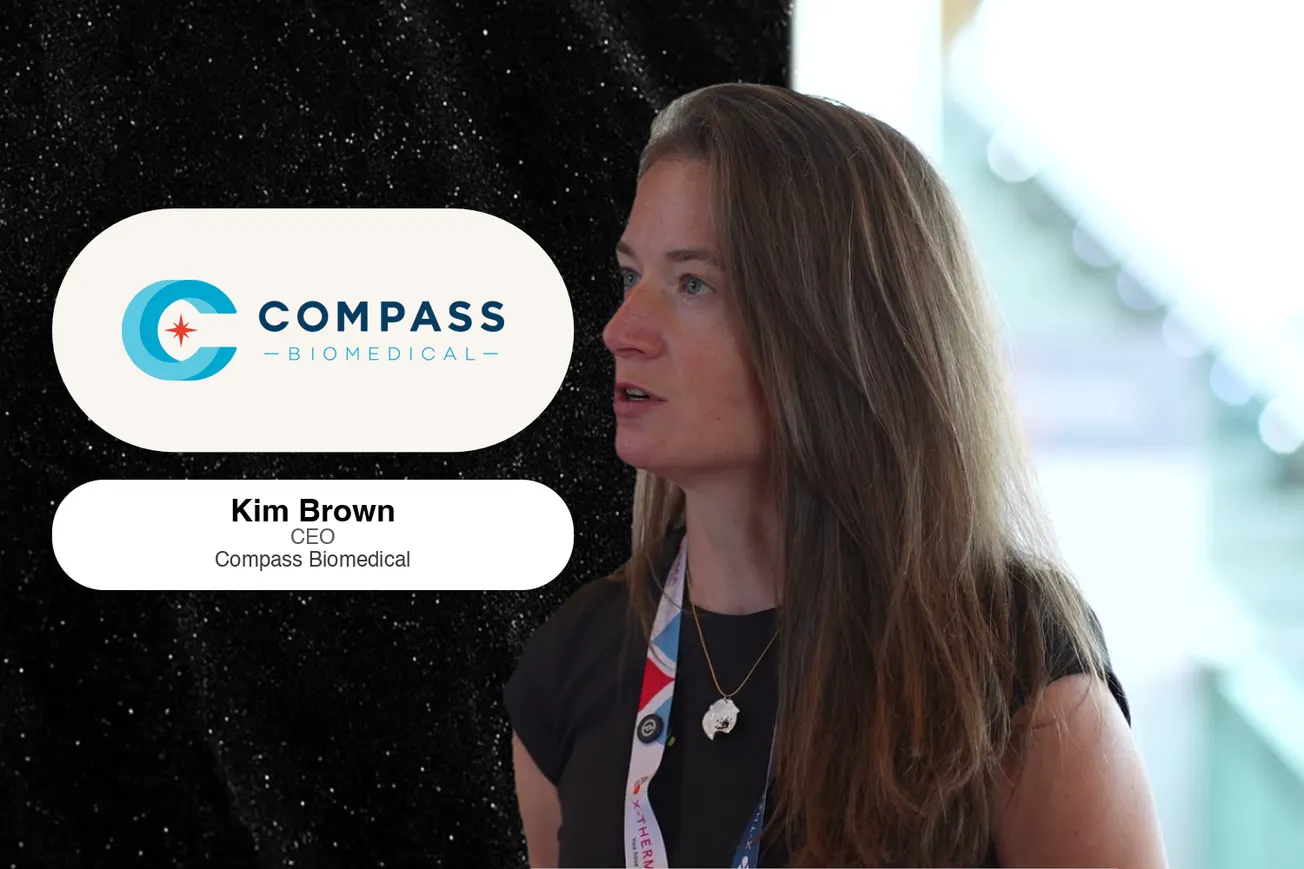
Kim Brown, CEO, Compass Biomedical | Onyx Live | ISCT Dublin 2026
Everyone watches the final cell therapy – far fewer watch what the cells are grown in. Compass Biomedical's Kim Brown on why culture media quietly shapes the product.
Everyone watches the final cell therapy – far fewer watch what the cells are grown in. Compass Biomedical's Kim Brown on why culture media quietly shapes the product.
Cell and gene therapy can get treatments approved – scaling them is the hard part. Cellular Origins' Jason Jones on automating manufacturing to reach 100,000 patients a year.
Exosomes are "cell therapy without the cells" – and University of Miami's Dimitrios Kouroupis sees these cell-free vesicles reshaping musculoskeletal medicine.
Fewer than 10% of eligible CAR-T patients ever get treated. Trenchant BioSystems CEO Jon Ellis says the bottleneck is no longer the science – it's manufacturing.
Most cell therapies arrive at the patient frozen – and BioLife Solutions CTO Sean Werner says the field still treats what happens after manufacturing as an afterthought.
Most of cell therapy fixates on the cell's target. MPC Therapeutics' Augustin de Bettignies says its metabolism — what it burns during manufacturing — matters just as much.
Most cell therapies don't fail at the finish line – they fail at the start, says iPSC consultant Stephen Sullivan. Why early decisions decide late outcomes.
The cell and gene therapy tools companies that scale aren't always the ones with the best technology, says i5 BioPartners' Jeff Galecke – they're the ones that can tell a clear story.
Nine years after Kymriah, the first ever CAR-T cell therapy, was approved, around 10,000 patients have been treated. Inside CAR-T’s next decade with co-inventor Bruce Levine.
Cell and gene therapy is having its golden age, says ISCT President Miguel Forte – and is still in adolescence. Inside the field's reshaping priorities.
Great science isn't enough to get funded, says investor Sven Kili – only great medicines are. Inside the CGT funding squeeze, and what specialist VCs actually screen for.
AviadoBio is running three CNS gene therapy programs and recently announced a capsid partnership with Apertura to take its silencing platform from rare disease into Alzheimer's.
In cell and gene therapy, the science is rarely the bottleneck – making it at scale is. Inside the Bayer–Charité incubator betting on Berlin to fix that.
Heart disease kills more people than every cancer combined. Inside Tenaya's bet that the precision-medicine playbook oncology pioneered will work on the heart, too.
More and more cell types cannot be frozen anymore. If you think about organoids, mixed cultures, artificial tissues – all of those require warm chain logistics.
In a funding-constrained biotech market, most early-stage teams still try to reinvent the AAV and advanced-therapy CMC playbooks the industry has already solved a dozen times over.
That bottleneck has become one of the biggest constraints on the next decade of cell and gene therapy growth, with hundreds of late-stage programs chasing a manufacturing footprint that has not expanded fast enough to match them.
An estimated 450,000 cancer patients were eligible for CAR-T in 2019; that number is projected to hit 2 million by 2029.
A bioethicist with a PhD in molecular genetics and a seat on the Vatican's Pontifical Academy for Life sits in a rare position to bridge the two.
Behind every approval sits a medical-safety sign-off that determines whether a one-shot cell or gene therapy reaches European patients.
Most CROs were built for small-molecule oncology, not for therapies that have to be manufactured fresh per patient and shipped under tight cold-chain windows.
Arbor Biotechnologies' CRISPR-based gene editor ABO-101 is being trialled as a one-time in vivo fix, with the redePHine Phase 1/2 study enrolling up to 23 adult and paediatric patients at Mayo Clinic and additional sites in the US, UK and Europe.

A single CAR-T dose still takes up to 33 days to manufacture, at $170,000–$220,000 per batch.
Stuart Curbishley on how adthera bio is tackling the biggest bottleneck in cell and gene therapy: getting therapies manufactured at scale.
Venture investment in cell and gene therapy has crashed by nearly $8 billion since 2021's peak, putting the field's translation to patients at risk.
With over 2,000 cell and gene therapies in clinical trials globally, the industry’s reliance on manual, labour-intensive manufacturing is an existential bottleneck.


Stuart Therapeutics is testing the first collagen mimetic peptide for dry eye disease – a novel mechanism that produced Week 1 staining gains vs. vehicle greater than any reported result for an approved therapy in their recent Phase 3.
With zero FDA-approved personalised iPSC therapies on the market, the vast majority of patients who could benefit from regenerative treatments still can’t access them.
The biotech industry destroys billions in shareholder value every year - failed trials, depleted cash, and abandoned pipelines leaving investors with nothing.
90% of oncology drugs fail in clinical trials - costing billions and, more importantly, delaying life-saving treatments for patients who need them now.
Will large pharma's AI adoption and deployment to drug development redefine biotech's role and business model?
38 trillion bacteria live in your gut — yet most microbiome tests can only identify them at the genus level, missing the strains that actually matter.
Hundreds of thousands of spine fusions are performed each year, but implant choice is still often limited to standard sizes.
Personalis is betting that detecting relapse at the molecular level, before it becomes radiographically obvious, can change how cancer is monitored and managed.
The machinery that governs gene expression is being targeted to beat cancer.
Millions of T1DM patients worldwide are on lifelong insulin and constant monitoring. But what if we could switch off the immune attack causing the disease?
If the disease is in the lungs, why deliver the drugs everywhere else?
The platform built to cut CAR-T manufacturing costs by ~50% is about to power its first patient dosing.
Capital is available, but only for companies with clean data, clear differentiation, and a believable commercial path.
A fully funded pharma study plus multiple R&D collaborations signals rising strategic pull.
Cema-cel is already in the pivotal Phase 2 ALPHA3 frontline lymphoma trial, with manufacturing capacity sized for tens of thousands of annual doses (up to ~60,000 across products).
The British biotech recently secured a £5.5 million pre-Series A round to advance their lead asset, Myo-004, toward clinical candidate selection.
"85% of failures are us having failed the molecule, not the molecule having not delivered."
Fresh momentum from Jefferies and a new $150 million non-dilutive financing has extended its runway into 2027.
Nuvation is gaining real momentum after its first FDA approval, with IBTROZI now treating a growing number of patients with ROS1-positive lung cancer.
Join me in San Fran as I interview CEOs and reveal what Onyx has in store for readers this year.
Ever thought a probiotic could help manage blood sugar by stimulating GLP-1?
Blood tests for cancer are here, and Guardant Health is leading the charge.
Lexicon's latest drug for obesity and weight management has a novel mechanism and is backed by Novo Nordisk.
What if the key to curing blindness wasn't targeting individual genes, but entire genetic networks?
Allucent is a CRO which has overseen many therapeutics through to FDA approval.
Can Cellares bring down the cost of some of the most expensive new therapies on the market?
Dr. Adil Ali asks Dr. John Patton (CSO) and Dan Miller (Formulation Development Lead) all about eSpraye's drug pipeline.
The story of how an Indian biotech startup slashed the cost of CAR-T from $475,000 to just $30,000 and started a revolution in global CAR-T therapy access.