

Table of Contents
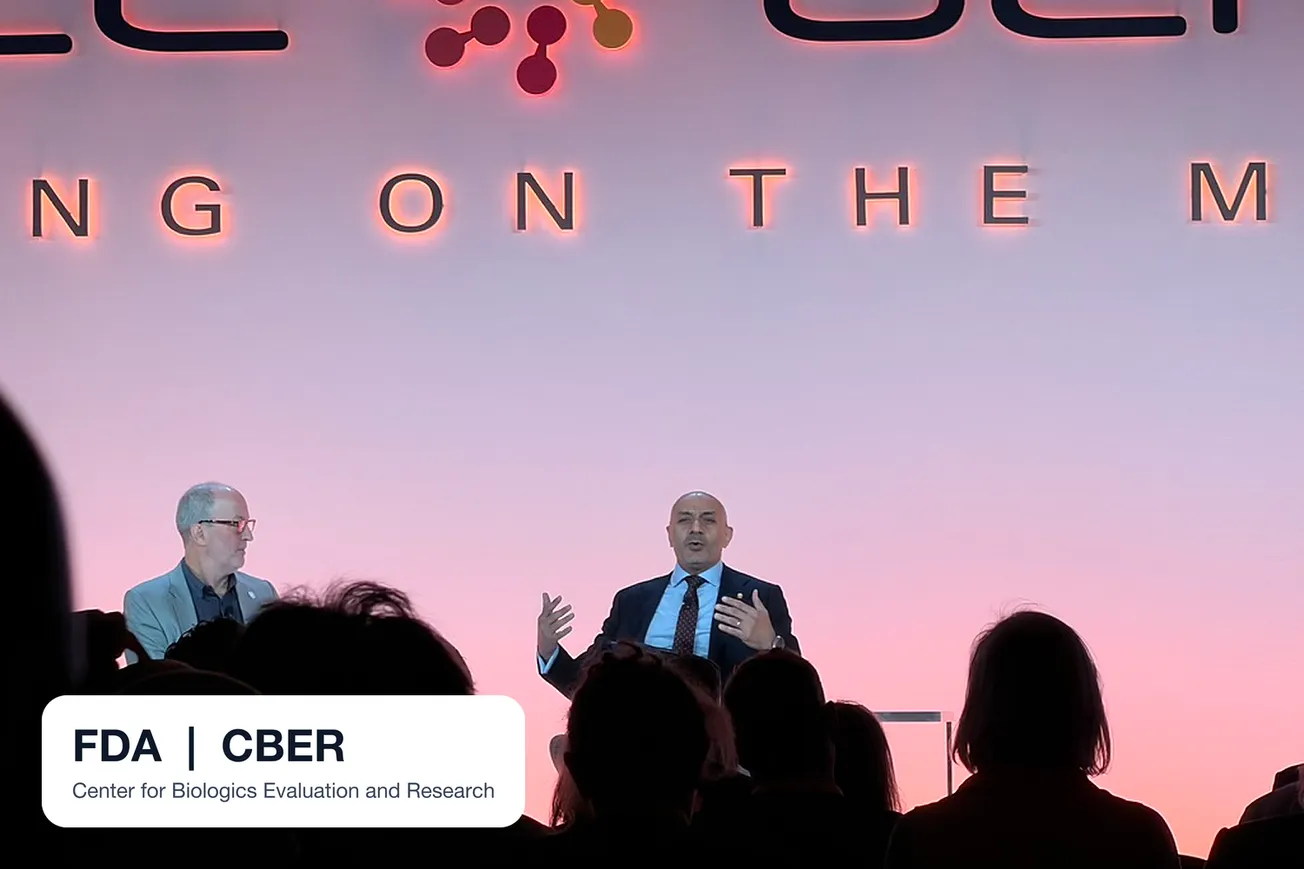
Rocket Pharmaceuticals used its company presentation at the Cell & Gene Meeting on the Mesa in Phoenix on Monday, October 5, 2026 to explain why it has restarted its pivotal Danon disease gene therapy trial at a lower dose following a patient death and an FDA clinical hold in 2025, with CEO Gaurav Shah arguing that a product enriched for full capsids had proved harder for Danon patients’ cells to handle.
Shah, who said he has led Rocket “since day one” about 11 years ago, framed the update around the company’s shift toward cardiac gene therapy. Its three clinical cardiac programs target Danon disease, PKP2 arrhythmogenic cardiomyopathy and BAG3-associated dilated cardiomyopathy, which he said together represent more than 100,000 patients. “While each rare disease is rare, rare disease is not rare,” he said.
Why the Danon dose came down
The lead program, RP-A501, is an AAV9 gene therapy for Danon disease, an X-linked disorder in which impaired autophagy leaves heart cells unable to clear debris. Shah likened autophagy to the cell’s “garbage recycling center” and said there are at least 15,000 patients in the U.S. and Europe, with affected boys typically not living past 19 or 20.
The pivotal Phase 2 trial is designed to enroll 12 patients. Shah said Rocket had increased the proportion of full capsids in its product from less than 50% to well over 50%, and found that this created a problem specific to the disease: because Danon cells lack autophagy, he said, they cannot process out the proteins that build up quickly enough.
Shah said the company then recalibrated the dose downward slightly. For context, Rocket disclosed in May 2025 that a patient in the Phase 2 study had died of an acute systemic infection following a serious adverse event involving capillary leak syndrome. The company said it had voluntarily paused dosing; the FDA placed the trial on clinical hold, which it lifted in August 2025 after Rocket removed the C3 inhibitor from the regimen and lowered the dose.
Rocket has now treated three patients under the modified protocol. Shah said they had been treated “very safely”. Rocket said in August that it had seen no thrombotic microangiopathy or capillary leak syndrome in those patients at the recalibrated dose of 3.8 × 10¹³ GC/kg, with follow-up at that point of at least four weeks, and said on September 15 that the FDA had confirmed a 12-patient pivotal efficacy population that includes those three, with co-primary endpoints at 12 months of LAMP2 protein expression and a 10% reduction in left ventricular mass index. The company expects to finish dosing the remaining nine patients by mid-2027.
On the Phase 1 data, earlier results from which were published in the New England Journal of Medicine, Shah pointed to protein expression out to five years alongside reductions in left ventricular mass index, BNP and troponin and improvements in KCCQ scores and NYHA class. “I don’t think you see this outside the world of gene therapy,” he said.
The newest information is still to come. Shah said Rocket will present updated Phase 1 data at an investor webinar on Tuesday, October 6 at 4:30 p.m. ET, along with new work on the epidemiology of Danon disease and the number of patients, which he called “a very important question for the field”.
PKP2 and BAG3
The second program, RP-A601, targets PKP2 arrhythmogenic cardiomyopathy using an AAVrh74 capsid. Shah pointed to athletes who collapse while exercising, and said PKP2 mutations are behind 33% to 50% of arrhythmogenic cardiomyopathy cases. The first three Phase 1 patients “look very good in terms of safety”, he said, with arrhythmias improved in all three and gains in KCCQ score and NYHA class in two of the three.
He argued that starting Phase 1 at the right dose can remove the need for dose escalation in gene therapy, describing the treatment as “one and done, they can never get it again”. Rocket is discussing the design of its next study with the FDA, he said.
The third program, RP-A701 for BAG3-associated dilated cardiomyopathy, is in a Phase 1 trial that Shah said is ongoing. He described BAG3 as a multifunctional protein affecting contractility, structure, protein quality and apoptosis.
Perseverance and humility
Shah opened by listing Rocket’s values and said that, through the current biotech and FDA cycles, “I would add perseverance and humility to this list because that’s what we all need as a biotech and partnership community.”
He closed on Kresladi, Rocket’s gene therapy for severe leukocyte adhesion deficiency-I, which the FDA approved in March 2026. He described severe LAD-I as a disease in which two-thirds of children die by the age of two, and welcomed the Alliance for Regenerative Medicine’s work with the FDA to accelerate therapies for fatal diseases, “for children especially”.
All clinical data referred to in the presentation are company-reported.
About Rocket Pharmaceuticals
Rocket Pharmaceuticals (Nasdaq: RCKT) is a commercial-stage gene therapy company based in Cranbury, New Jersey, developing AAV therapies for inherited heart disease and lentiviral therapies for rare blood disorders. Its first product, Kresladi (marnetegragene autotemcel), received FDA accelerated approval in March 2026 for pediatric patients with severe LAD-I who lack an HLA-matched sibling donor for stem cell transplant, and the company has said it anticipates commercial availability in the fourth quarter of 2026. Onyx covered the approval at the time.
The approval came with a Rare Pediatric Disease Priority Review Voucher, which Rocket sold for $180 million in a deal that closed in June. The company reported $283.7 million in cash, cash equivalents and investments as of June 30, 2026, which it said it expects to fund operations into the second quarter of 2028.
In the cardiac pipeline, RP-A601 holds the FDA’s Regenerative Medicine Advanced Therapy designation, and Rocket said in August that it expected a regulatory update on the program in the second half of 2026 and initial patient dosing in the RP-A701 Phase 1 trial in the same period.
Onyx has previously profiled Shah in From Grammys to Gene Therapy.
Sources: Rocket Pharmaceuticals company presentation, Cell & Gene Meeting on the Mesa, October 5, 2026; Rocket Pharmaceuticals press release (September 15, 2026); Rocket Pharmaceuticals press release (August 2026); Rocket Pharmaceuticals second quarter 2026 results; Rocket Pharmaceuticals RP-A601 Phase 1 data release (May 2025); Rocket Pharmaceuticals RMAT press release; New England Journal of Medicine; Fierce Biotech; BioSpace


Comments