


Table of Contents
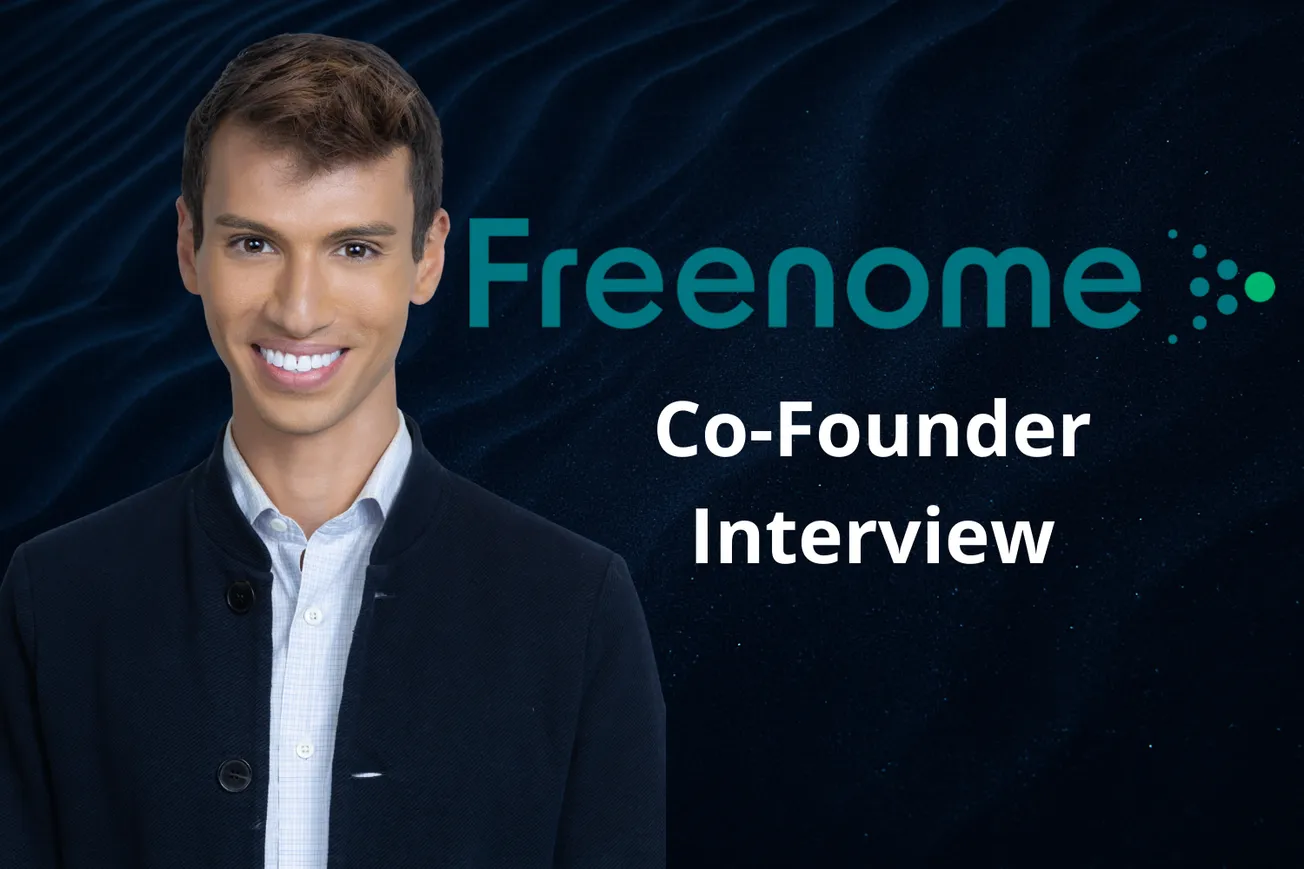
Could you start by giving our readers a bit of background about yourself, summarizing your career path and what led you to found Freenome?
Absolutely. I came from the therapeutic world, and what really stuck with me was how hard it is to give patients a durable response with less toxicity. There’s been real progress, but if we don’t detect cancer early and intervene, it’s very hard to talk about a cure.
Those incremental advances on the therapeutic side pushed me to step back and ask a different question: what would it actually take to detect cancer early? How do you find the people who need to be screened, across 100- or 200-plus cancers, and make sure they’re empowered to do it with reimbursement in place?
It became clear there was going to be a tidal wave in therapeutics, but the big gap was early detection. At the time, Exact Sciences was a penny stock. No one wanted to talk about liquid biopsy. Nobody was funding diagnostics that carried reimbursement risk.
What’s remarkable is how quickly that changed. In just over a decade, you now have multi-billion-dollar products, reimbursement for liquid biopsy, and well-funded companies delivering tests to patients. That’s always been the vision; to shift oncology toward prevention and much earlier intervention.
Could you outline what Freenome is focusing on and what you are trying to bring to patients?
So, we’re focused on blood-based testing for early cancer detection. What we’ve built is a multiomics platform that can detect 10-plus tumor types, but we made a very deliberate choice to start with a single application using a common platform.
We chose colorectal cancer first, because the unmet need is massive. About 50 million people in the US aren’t getting screened, despite full reimbursement, no out-of-pocket cost, and clear guideline support. Colonoscopy is the gold standard, but a large portion of the population over 45 simply isn’t doing it.
That’s where blood-based testing fits. There’s already a Medicare reimbursement pathway in place, and it gives us a way to reach people at scale who aren’t participating today, or who have comorbidities. Adding a blood test, alongside stool tests and colonoscopy, creates a more complete screening ecosystem and drives better outcomes.
From there, you can think of this like the Waymo model. Once you have infrastructure out there collecting data and millions of people using your test, those data then allow you to launch the other tumor types on the same platform.
Cancer is an age-related disease. Most people over 45 are already eligible for breast or lung cancer screening, depending on criteria. Accessibility is core to our mission, which is why reimbursement matters so much. Self-pay has a role, but if you want to reach millions of people, you need coverage.
Currently, we’re building on colorectal cancer, leveraging the multimodal data we’re collecting to validate lung and other tumor types. It took a long time to get the first test right, but we’re now on the precipice of launching, and validating, up to three additional tests, starting in 2026. That’s the flywheel we’re building, starting with colorectal cancer.
AI is obviously a big buzzword in diagnostics. How has that shaped things internally?
One hundred percent. It’s an area we’ve been working on, and honestly banging our heads against the wall, for six-plus years.
One of the biggest challenges, and something we presented at an AACR AI conference, earlier this year, is that molecular data sets are small and extremely noisy. We’ve spent years building multimodal methods for liquid biopsy, but most models just learn the wrong things. They learn batch effects, which institution a sample came from, or every clinical covariate you can imagine, instead of the biology.
The real limitation has always been data scale.
What changed recently is that embedding methods and transformer-based models finally started to break through. In Q4 of 2024, for the first time, a deep learning model actually beat our linear model. We were surprised, so we waited for an independent, blinded validation. It beat it again.
That gave us more confidence that even with tens of thousands of samples, some of these transformer-based approaches can start to generalize. We’re not rushing that model to the FDA, but the regulatory pathway is clear. You prespecify the change, work closely with regulators, and support it with both historical validation studies and real-world data from a reimbursed commercial test.
Because we’re operating at scale, with access to longitudinal EHR data, we can compare newer deep learning models against our current linear model in real-world settings, such as looking at who develops colorectal cancer or who develops advanced adenomas, at a scale that very few companies can achieve.
Right now, that’s essentially Guardant and Freenome. The key point is that the technology is finally learning the biology in a way that can generalize, but only if you’re in a position to generate the validation evidence that regulators require.
What’s your attitude toward partnerships?
There are really two major partnership areas for us.
The first is commercial. That commercial flywheel is what ultimately drives the data needed for validation, so you have to work closely with health systems and channel partners that bring in orthogonal data.
Routine labs like Labcorp and Quest - Quest is one of our investors - are highly relevant. So is imaging data from historical mammograms. If you can empower a broader provider data ecosystem that includes EMR companies, health systems, and payers, the opportunities expand quickly. That’s one big area.
The second is strategic partnerships, and our collaboration with Exact Sciences is a major focus. A core part of that deal was figuring out how to get to scale and get to millions of tests per year in a faster, cheaper, and more efficient way, while retaining access to the data.
That data access was a huge win. Our machine learning scientists were incredibly excited about it because it solves a problem no one has really cracked in oncology diagnostics, and, frankly, diagnostics more broadly. Most tests today are built for small populations or people who already have cancer. What we’re building is designed for everyone over the age of 45.
What principles guide your capital allocation?
The short answer is it’s shifting from very R&D-heavy to commercial.
But I view it as: what do you need to innovate to actually bring better tests to patients for decades to come? That’s always the north star. Providing more value for patients, that’s why we’re here.
What’s so important is building that commercial model that fuels your R&D. So, you don’t need to spend as much capital running large, bespoke studies that are still relatively small in scale. Look at PREEMPT - 50,000 people. Exact Sciences is doing three million-plus tests per year.
If half of those people consent for future research, you’re looking at a million people in a trial versus 50,000. The cost differential is unbelievable. And this is a reimbursed test. That million-person study is coming from routine testing.
So, capital allocation isn’t really changing. It’s allowing us to do more with the same level of investment, at an unprecedented scale.
Once these assays reach the market, is there potential integration into clinical guidelines?
Yes. And that was one of the reasons we chose colorectal cancer first. Some people thought we were crazy - why start with just one and embed other tumor types for later?
But CRC already has guideline support and quality measures in place. We’re not asking health systems to change how they practice medicine. We’re adding another modality and building the evidence, alongside them, to address a very real problem, which is screening adherence.
Once that’s established, expansion becomes much more natural. If you’re a smoker, you check the box for a Freenome lung test. If you have GERD, you move into esophageal surveillance. That’s how we fit into existing workflows and then extend beyond colorectal in a way that makes clinical and operational sense.
Did you found Freenome while you were in college?
Yes, I left Dartmouth to focus fully on Freenome. I just couldn’t get rid of the itch. It was so clear to me that we needed to detect cancer earlier, especially as we started to see treatments work better, when disease is caught sooner.
Freenome’s first co-founder was Charlie Roberts, and we’ve been building the company together ever since. I still like looking back at our first pitch deck, because the high-level vision is remarkably consistent, even with all the changes that inevitably come with building a company.
What cultivated that entrepreneurial spirit so early?
I wasn’t focused on advancing academically. I just felt this need to get something out there that could help patients.
My younger sister has a heart condition, where even cardiologists don’t really know the prognosis. There were surprise procedures. Seeing how tenuous the medical system can be, and at the same time how it can save someone’s life, really emboldened me.
I wanted to be a doctor. The first thing I gravitated toward was research, and then biotech. That started in high school, and I couldn’t shake it.
Working in therapeutics, trying to build a non-toxic way to activate the immune system, showed me how hard it is to intervene late in disease. That’s when it became clear that the bigger unmet need was early detection, so you can enable prevention and earlier intervention.
Is the vision one blood test for all cancers?
The key point is that it’s for individuals who need it. Not everyone needs to be screened for everything, all the time. Personalization matters, because risk factors determine what makes sense clinically and economically.
Longer term, this funnel of people over 45 enables population-level screening beyond oncology. Neurodegenerative diseases like Alzheimer’s are a good example, where we’re starting to see efficacy earlier in disease.
When we started Freenome, maybe eight to ten countries had organized screening programs. Today it’s 30 to 40. Adoption is accelerating, and it’s a really exciting time.
Comments