

Table of Contents
Could you walk us through your career path and some of the key experiences that led to your appointment at Scipher?
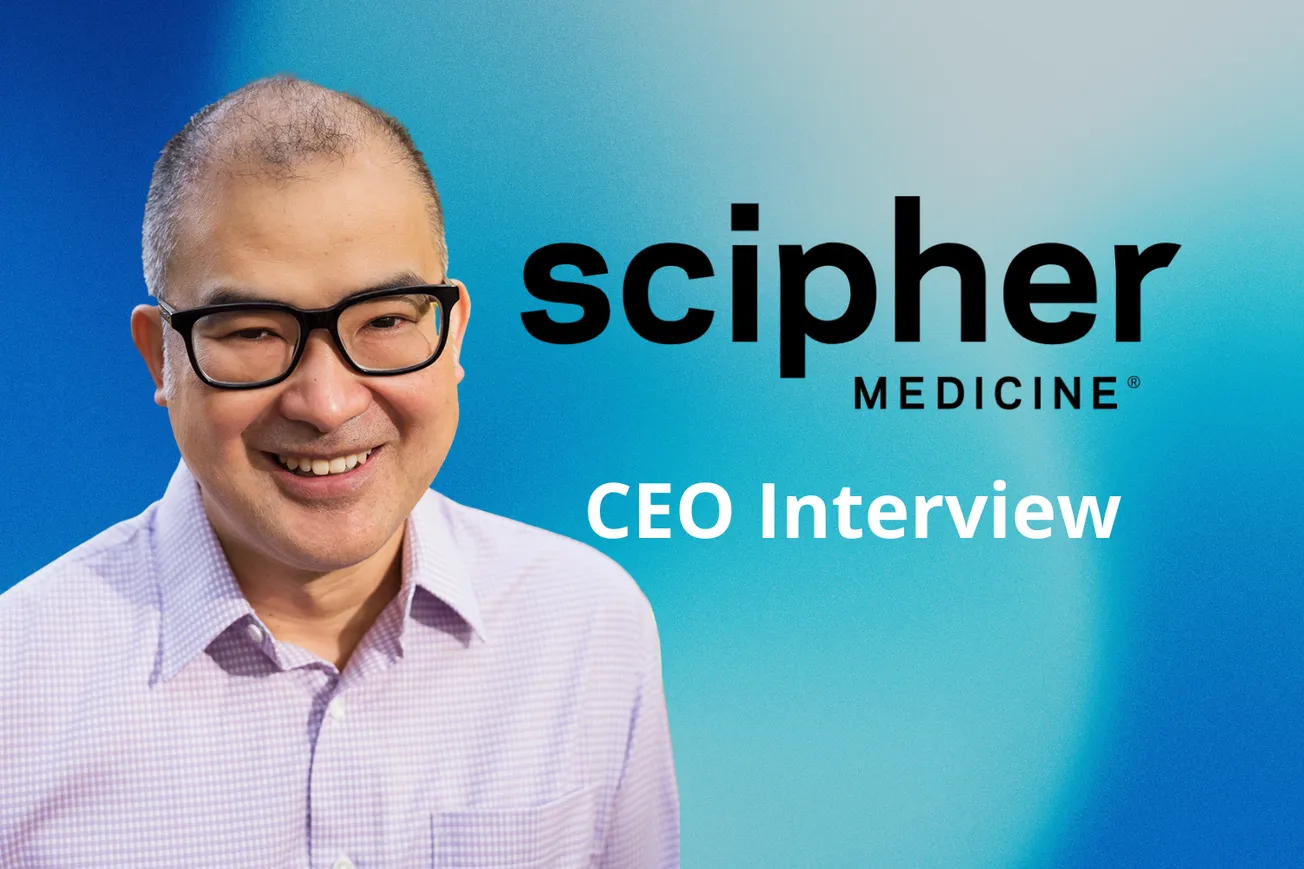
Scipher is a precision medicine immunology company, and it is operating, now, in both diagnostics, as well as therapeutics. My career’s been built in many chapters leading up to Scipher.
In my most recent role, I was a public company CEO, running a company called CareDx, which is a transplant diagnostics company, and the leader in the space - one which evolved from diagnostics into offering data and digital patient solutions, as well.
Prior to that, most of my experience was on the therapeutics side. I was COO of another public company called Ardelyx. Before that, I was at larger pharma companies, such as AstraZeneca, where I was EVP of corporate development and strategy, in the biologics division, as well as having run some mid-size markets in AstraZeneca, and, at one point, having run all their portfolio management.
I’ve also run two of the largest brands for two other organizations. One was Organon, with the fertility franchise, as well as oncology, immunology and vaccines. I also led the largest US drug at Boehringer Ingelheim.
I’m a physician by training, having practiced in Sydney, Australia, and I also did some research fellowships at Duke and UCSF, as well as having been a consultant, at McKinsey, for a couple of years.
All in all, I think Scipher is the perfect landing spot, and at a very exciting time. It builds into diagnostics, the therapeutics experience, and the data that, in my previous role, we were evolving towards. At Scipher, there is also a notion of innovation and optionality. Every role that I’ve been in has been about driving innovation and commercial impact.
Talking about Scipher’s innovation: your Spectra platform is helping develop molecular signatures guiding treatment selection for autoimmune diseases. How exactly is it doing that?
Over the past decade, Scipher has built the Spectra platform. I'll give you a bit of background. It’s basically a human interactome platform, so it maps every protein in the human body, which it’s done for the last ten years. We’ve mapped about 26,000 proteins, and we investigate what are called protein-protein interactions.
What’s important is that we look at linkages that are associated with disease and with treatment. This platform has allowed us to do a couple of things across the product offerings.
The one we’re talking about, today, is the molecular treatment response signatures - specifically PrismRA. PrismRA is pretty unique. It’s the only approved test by CMS, and reimbursed by CMS, that lets you look at treatment response in immunology - specifically RA (rheumatoid arthritis) patients. We use the test to tell if you respond, or not, to treatment, and in this case, anti-TNFs.
Anti-TNFs are the broadest-used first-line biologics. They were the world’s largest-selling drug class for over a decade, although only about a third of patients achieve true remission. So, what’s useful about our technology is that ability to predict response and tailor it to the individual.
What sort of data has been most convincing in showing the efficacy of these predictive algorithms?
We’ve got extensive publications for PrismRA. To get through the MolDx process, you need analytical validation, clinical validation, and clinical utility. All of which was generated. The test itself is unique, because it's a 23-feature classifier. Diagnostic tests are often just one marker. Here, you have 23 features, comprising nineteen transcripts, three clinical variables, and one proteomic measure.
We also have real-world use that has influenced commercial behavior. The overall platform has over a hundred peer-reviewed publications. One in four have been in Nature or Nature-related journals, which obviously reflect a high-level of impact. Moreover, we have strong co-founders in Joe Loscalzo and Laszlo Barabasi.
So, the foundational platform is robust, and we’ve been able to generate product offerings from it. PrismRA is one example.
How is Scipher using real-world patient data to improve your models, while staying compliant with regulation?
Yeah, firstly, all our data generation follows HIPAA, lab rules, and FDA rules. So, we’re good practitioners.
We think of data in three ways. Firstly, we have the largest immunology transcriptome dataset in the world, incorporating over 50,000 unique transcriptomes from unique patients. We’ve got another four- to five hundred thousand comorbidities associated with those. These are clinically linked and longitudinally matched. It’s a great dataset that we can feed back into our models and provide to partners.
Secondly, we use data to improve things like target discovery. For example, in RA and obesity, we found targets we never would’ve found without the help of the real-world data. It helped create totally new targets that wouldn’t have been otherwise identified.
And, thirdly, we use the data, on an ongoing basis, to improve classifiers. We’re developing new classifiers beyond TNFs (Tumor necrosis factor), notably for Orencia (T-cell) and for JAKs (Janus kinases).
We also try to contribute back to science. At the recent American College of Rheumatology conference in Chicago, we presented some real insights on PrismRA and on GLP. Earlier, I mentioned target discovery in obesity - half the patients in our database have BMI over 30. So, it’s a really interesting dataset. We can segment them, and that’s how we came up with validated clinical targets.
Not many companies have been able to translate real-world data like this. Oncology companies are good at it, but, in immunology, it’s still early.
Are the datasets open source or proprietary?
The real-world dataset, that I just mentioned, is proprietary. Those 50,000 patients - that’s all Scipher. We also have serum or blood tubes available for different partners. So, they’re not open source either, but accessible through partnership.
We’ve only built this data business over the last nine months. We’ve had about a dozen partnerships. About half have been announced. Courtney Morris, our chief business officer, has helped build out that data side. It’s new for Scipher.
What cost pressures are providers facing, and how is Scipher reducing that burden?
I think Scipher really is in a unique position. It’s one of the first companies to proactively address costs in treatment. Drug companies want mass-market drugs. They don’t like unnecessary segmentation. Oncology’s the exception; precision oncology has shown you can expand markets by having well-defined patient segments.
Immunology and autoimmune diseases are very complex and heterogeneous. Companies have not been successful in identifying signatures. We had a prior company where phase II results were exceptional but the first phase III failed. Everyone was shocked. The second pivotal succeeded and the drug was approved, but the message was: these diseases are complex.
That’s where Scipher helps payers in these complex diseases. We can identify patients that will respond to treatment by utilizing a complex and precise molecular signature, not just a single gene or mutation. We can match that signature to the treatment response. That’s the special part.
Payers have issues: costs are high, and they need to make sure patients get the right treatment. PrismRA helps get the right patients to the right treatments faster and reduces trial-and-error. All of that reduces wasted spend.
Humira, the world’s largest-selling drug, shows that only one-third of patients achieve low disease activity or remission. If Humira were ours, we’d have narrowed the patient selection before launch.
This leads to clinical development. Why have a blockbuster drug where only a subset responds? Narrow down the patients during development, find the highest-efficacy populations, before bringing it into trials and, eventually, to commercial use.
Diagnostics remain important, but the big impact is pairing them with clinical development; true companion diagnostics (CDX) in immunology, with meaningful differentiation.
What about partnerships and commercial footprint? How do you decide who to work with?
For us, it’s understanding how we can have the greatest impact. When I joined, Scipher was a commercial diagnostics company, with field reps and a traditional model. But the biggest impact comes from influencing drug development and creating future-generation CDXs.
Commercially, we’re focused on immunology. The first is rheumatology, with rheumatoid arthritis now, and more rheumatology areas to follow, later. We’re also evaluating in-licensing of phase II opportunities, which could be dermatological, gastrointestinal or other autoimmune diseases.
I’m a patient myself in the autoimmune space, so I feel the relevance. I was literally with my rheumatologist, yesterday. After spending ten years on one treatment, she wants me to switch, based on response.
Partnerships must have a high commercial impact. Without that, things don’t get funded. As we develop therapeutics, we’ll use diagnostics to target the highest-efficacy patients. Patients would know upfront that the drug is going to respond to them. That guides who we work with.
With PrismRA, how will you get clinicians to prescribe it, and increase uptake? What would it mean for patients?
Firstly, we’ve decided to focus on reducing the cost of goods. It was highly inefficient for us. We’re working on the average selling price for commercial reimbursement, with additional publications and data. You need a viable business model. Most diagnostics companies haven’t survived the last two or three years.
By the end of next year, we should have a diagnostics business that’s break-even or profitable. Then we expand, bringing additional products and building commercial efficiencies. We’ve been used by 2,000 rheumatologists, showing a high level of loyalty. Getting a broader share of voice comes after lowering the cost of goods.
Secondly, the drug pipeline makes things more commercially efficient.
Thirdly, we’ll use the test in clinical development, which hasn’t been publicly shared before. That overcomes the commercial diagnostic challenges, because it becomes paired with the drug, and becomes self-fulfilling.
It will still be used with TNF inhibitor therapies commercially, and future programs will expand usage.
Adoption is not the 2025 driver, but, going into late 2026 and 2027, it certainly will be.
Are you saying PrismRA is going to be used for endpoints in clinical studies?
We’ll have PrismRA used commercially, and, eventually, in different clinical studies. It becomes self-fulfilling, as it will be available early, and paired to drug programs. As we expand disease areas, we’ll have diagnostics, therapeutics, and data, as being three parts of the business.
Some companies do two. We’re doing all three.
And the competitive landscape? Large diagnostics firms wanting to expand into AI? Where does Scipher sit?
I think we’re at the forefront of AI, having started this journey a decade ago. Immunology hasn’t really had breakthroughs in AI or CDXs. We combine both.
Large diagnostics companies, such as Natera, Guardant Health, Exact Sciences, and even CareDx, are not being rewarded by shareholders for AI. Their metrics are profitability, top line, and gross margin. So, their focus isn’t AI innovation.
Newer players, like Tempus - who are slightly more established - and Caris Life Sciences, they’re the ones to watch. But, in immunology, no one has cracked the code. Our patient dataset and human interactome give us a head start.
A lot of AI companies enter and say, “We can build targets, we can build diagnostics,” but they don’t put money into developing drugs. We will. That’s the difference.
We partner with companies like Ionis, and another top three pharma on biomarkers. But the real value is when we develop the therapeutics.
One of our largest investors is with a firm that was one of the largest investors in Tempus. They put $75 million into the Caris IPO - all of which is public. The firm is Neuberger, who have large private, and public, positions in this space.
What’s one core leadership principle that you’d like to pass on to the next generation of biotech executives?
There’s always going to be differentiated innovation. Everyone wants to have an impact. However, you have to bring your technology to the point of greatest impact. Lots of great innovations never progress.
You’ve got to make it relevant. Our platform is great in commercial diagnostics, but where it will be exceptional is clinical development. Make sure that you can bring your innovation to a true commercial outcome, so you get real impact for patients, physicians, and payers.
What questions should we ask Reginald next? Let us know in the comments.

Comments