


Table of Contents
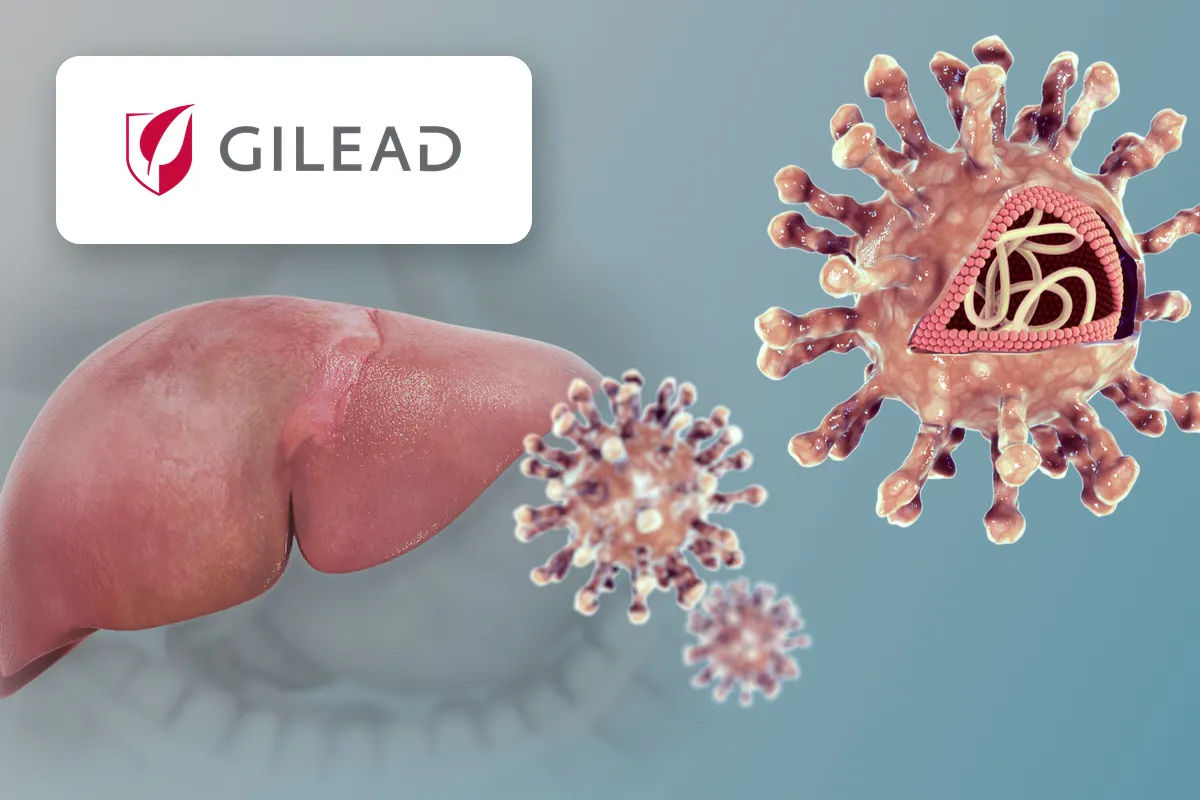
On May 22, 2026, the FDA granted accelerated approval to Gilead Sciences’ (GILD, Nasdaq) Hepcludex (bulevirtide-gmod), the first and only treatment approved in the United States for chronic hepatitis delta virus (HDV) infection. The once-daily 8.5 mg subcutaneous injection is indicated for adults without cirrhosis or with compensated cirrhosis.
Chronic HDV is the most severe form of viral hepatitis. It arises only in people already carrying chronic hepatitis B, and it accelerates progression to cirrhosis, liver failure, and liver-related death. Until this approval the US had no licensed therapy for it, and clinicians fell back on off-label, interferon-based regimens of limited benefit.
Bulevirtide is a first-in-class entry inhibitor: it blocks the bile-acid transporter (NTCP) that both HDV and HBV use to get into liver cells — a different line of attack from the polymerase and protease inhibitors that reshaped hepatitis B and C. The molecule is not new to regulators. It has been available in the European Economic Area at a 2 mg dose, as Hepcludex, since 2020, but the FDA declined an earlier US application at that dose in 2022.
The clearance rests primarily on the controlled Phase 3 MYR301 study (NCT03852719). At Week 48, 48% of patients taking Hepcludex 8.5 mg once daily met a combined endpoint — undetectable or sharply reduced HDV RNA together with normalization of alanine aminotransferase — against just 2% of a delayed-treatment control group. The benefit deepened the longer patients stayed on therapy: the share with undetectable HDV RNA rose from 20% at Week 48 to 36% at Week 96 and 50% by Week 144, the full treatment span.
As an accelerated approval, the decision turns on those virologic and biochemical markers rather than a proven clinical-outcome benefit, which Gilead must now confirm in a post-marketing trial. Bulevirtide carried Breakthrough Therapy, Orphan Drug, and Priority Review designations through the review. Its label carries a boxed warning that stopping treatment can trigger severe acute flare-ups of both hepatitis D and hepatitis B; the most common adverse reactions were headache, abdominal pain, fatigue, pruritus, and injection-site reactions.
The approval “fills a critical gap in care for patients with chronic HDV infection,” said Wendy Carter, DO, acting director of the Office of Infectious Diseases in the FDA’s Center for Drug Evaluation and Research. For Gilead, it closes the last open front in a viral-hepatitis franchise that already spans hepatitis B and a cure for hepatitis C — and converts a 2022 rejection into a first-in-disease US launch.
Sources: Gilead Sciences; FDA press announcement, “FDA Approves First Treatment for Chronic Hepatitis Delta Virus (HDV) Infection,” 22 May 2026; Medscape.
Related: More FDA Greenlit approvals.


Comments