



Table of Contents
The FDA cleared four novel drugs in February spanning inflammatory dermatology, psychiatry, rare metabolic disease, and pediatric skeletal dysplasia. The throughline was operational refinement: a steroid-sparing topical for eczema, a new branded antipsychotic entry, an enzyme replacement therapy anchored to a surrogate biochemical endpoint, and a long-acting peptide engineered for weekly dosing in children.
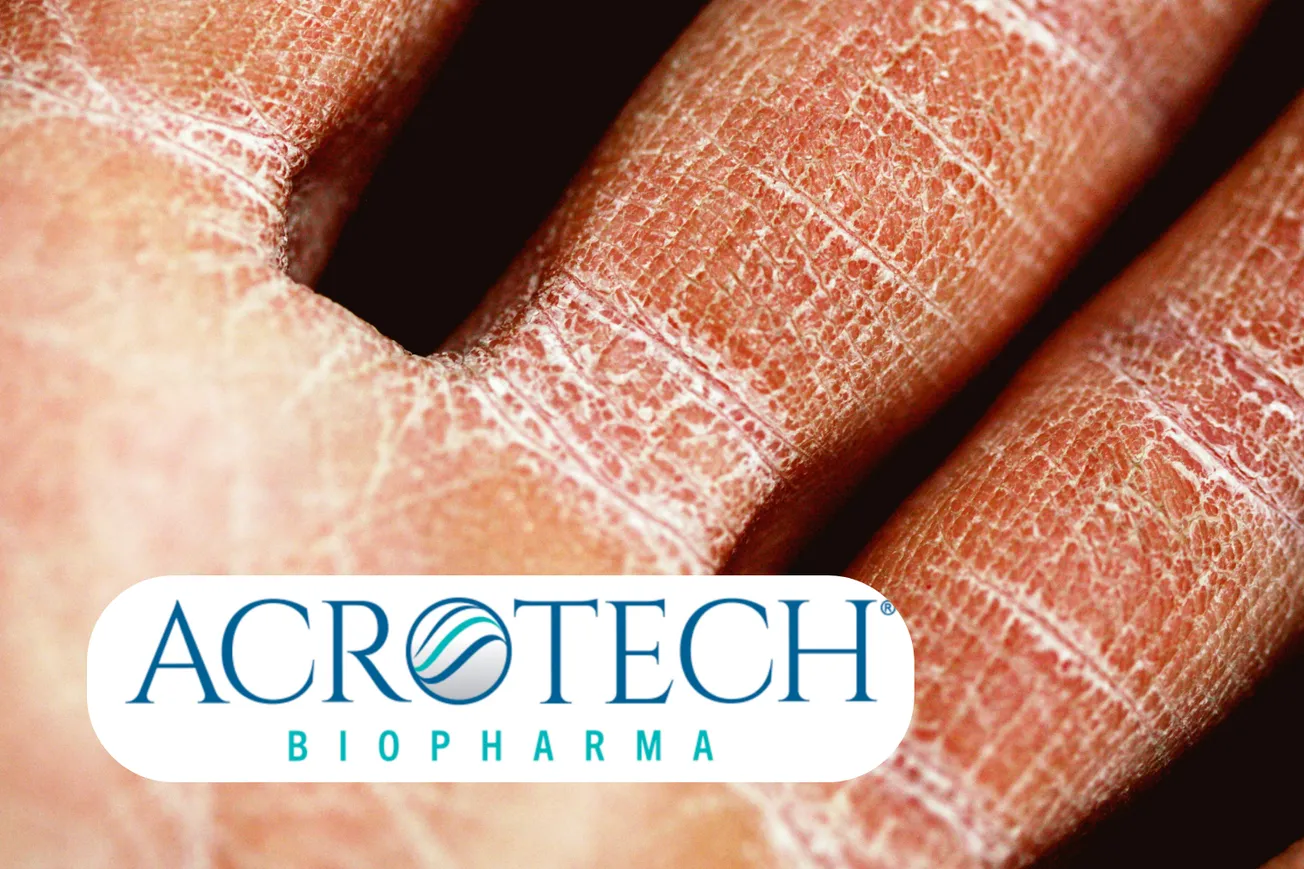
Adquey: Acrotech expands nonsteroidal eczema control
On February 12, Acrotech Biopharma won approval for Adquey (difamilast) ointment 1% for adults and pediatric patients aged 2 years and older with mild to moderate atopic dermatitis.
Difamilast is a nonsteroidal topical PDE4 inhibitor intended to dampen inflammatory signaling in the skin. The biology is familiar in eczema with a practical commercial point: a steroid-sparing option that can be used chronically without the atrophy concerns that limit long-term topical corticosteroid use.
Approval was supported by pivotal vehicle-controlled phase 3 studies demonstrating higher rates of IGA success at week 4 versus vehicle, alongside a tolerability profile consistent with a nonsteroidal topical. Adquey enters a crowded category where formulary access, physician switching from existing nonsteroidals, and breadth of use enabled by its pediatric label will determine share.
Bysanti: Vanda adds a branded antipsychotic across schizophrenia and bipolar I mania
On February 20, Vanda Pharmaceuticals received approval for Bysanti (milsaperidone) tablets for schizophrenia and for manic or mixed episodes associated with bipolar I disorder in adults.
Vanda describes milsaperidone as a new chemical entity atypical antipsychotic that is bioequivalent to iloperidone across the therapeutic dosing spectrum, enabling use of iloperidone's established efficacy and safety knowledge base. The label's pharmacology notes antagonism at dopamine D2, serotonin 5-HT2A, and alpha1-adrenergic receptors, with rapid interconversion to iloperidone providing dual active molecules.
Commercial availability is anticipated in Q3 2026. This is a high-volume launch opportunity with a high bar: differentiation will be judged on tolerability, dosing practicality, and contracting rather than pathway novelty.
Loargys: Immedica advances enzyme replacement for ARG1-D under accelerated approval
On February 23, Immedica Pharma secured accelerated approval for Loargys (pegzilarginase-nbln) injection for hyperargininemia in adults and pediatric patients aged 2 years and older with arginase 1 deficiency, in conjunction with dietary protein restriction. ARG1-D affects an estimated 250 people in the United States.
Pegzilarginase is a recombinant human arginase-1 enzyme replacement therapy designed to lower plasma arginine, the central biochemical driver of neurologic injury in ARG1-D. The strategic premise is direct metabolic control beyond diet, with a launch footprint anchored in specialized centers and longitudinal monitoring.
Approval was based on the phase 3 PEACE study, with 90.5 percent of treated patients achieving plasma arginine levels below the guideline target at week 24. The near-term clinical and commercial narrative will depend on execution of confirmatory obligations and whether biochemical control translates into durable functional stabilization in practice.
Yuviwel: Ascendis brings once-weekly CNP biology to achondroplasia
On February 27, Ascendis Pharma received accelerated approval for Yuviwel (navepegritide) to increase linear growth in pediatric patients aged 2 years and older with achondroplasia with open epiphyses.
Navepegritide is a long-acting prodrug of C-type natriuretic peptide designed to provide sustained exposure and counterbalance downstream consequences of FGFR3 overactivity. In a pediatric, chronic setting, the differentiator is delivery strategy: a weekly regimen intended to lower treatment burden without retreating from mechanism.
The clinical package included randomized, placebo-controlled data anchored in improvement in annualized growth velocity over a one-year window, the type of surrogate endpoint that supports accelerated approval in this setting. Yuviwel intensifies competition in achondroplasia, where caregiver logistics and adherence are central to real-world benefit.
The Strategic Brief
Yuviwel is the most strategically visible approval, expanding a competitive achondroplasia market where dosing cadence and sustained exposure can reshape adherence and persistence.
Loargys is a focused orphan launch, using accelerated approval to formalize enzyme replacement for ARG1-D, with confirmatory follow-through as the durability test.
Adquey and Bysanti are tactical but meaningful portfolio additions, competing in large, established categories where formulation, tolerability, and commercial execution determine uptake more than class novelty.
Sources
Adquey FDA approval letter – Adquey (difamilast) – 02/12/2026
Acrotech Biopharma press release – Adquey (difamilast) – 02/13/2026
FDA prescribing information – Bysanti (milsaperidone)
Vanda Pharmaceuticals press release – Bysanti (milsaperidone) – 02/20/2026
Immedica press release – Loargys – 02/23/2026
PEACE trial (NCT03921541)
Prescribing information – Yuviwel (navepegritide)
Ascendis Pharma press release – Yuviwel – 02/27/2026

Comments